
Building the Human Layer: A 2025 Review
When we began curating highlights for the 2025 Year in Review, we were struck by the scale of what Bitcoin Dada accomplished in one year. It was a year marked by expansion, deeper impact, and clear proof that women are not only participating in Bitcoin across Africa, but helping shape how it is learned, built, and led.
What started as a focused mission to improve financial inclusion for women through Bitcoin continued to evolve into a continental movement. In 2025, Bitcoin Dada strengthened its programs, expanded into new countries, built technical capacity, and showed what is possible when community, purpose, and execution come together.
In retrospect, 2025 was a defining year for Bitcoin Dada. We scaled our reach, deepened partnerships, and laid the foundation for the next phase of our journey. Join us as we look back at the moments that shaped Bitcoin Dada in 2025.
2025, by the Numbers:
- 1200+ women trained across nine Bitcoin Dada cohorts since inception, with 300+ trained in 2025 alone
- 122 female developers onboarded through DADA Devs Cohorts 2 and 3
- 5 Bitcoin-focused events delivered across Nigeria, Kenya, and Uganda
- 12 African countries engaged through online and in-person programs
- 3 DADA Devs technical cohorts delivered
- Multiple international forums represented, including Oslo Freedom Forum, Adopting Bitcoin Cape Town, Trustless by Design, ABC Diaspora, and ABC Mauritius
A year shaped by focus
At the start of the year, Bitcoin Dada made a conscious decision to narrow its focus.The question was no longer whether women belonged in Bitcoin. That had already been answered. What remained was how women could move through the ecosystem with confidence, skill, and agency.
This shift informed everything that followed.
The launch of DADA Devs in 2024 marked a clear turning point. It formalised Bitcoin Dada’s entry into technical capacity building, creating a pathway for women to move beyond understanding Bitcoin into actively working on Bitcoin. The emphasis was practical, it was simply learning by doing. Building alongside others and being accountable to real standards.
Alongside this, Bitcoin Dada continued its core education program, refining delivery while expanding reach. By the end of 2025, nine cohorts had completed training, with over 1200+ women educated across the continent. More importantly, the alumni network began to function as a living system rather than a static list. Women returned as mentors, organisers, and collaborators, quietly extending the work beyond the classroom.
Growth that followed community
Bitcoin Dada’s expansion in 2025 did not follow a growth playbook. It followed people.
Participation during the year spanned twelve African countries, including Nigeria, Kenya, Ghana, South Africa, Zambia, Tanzania, Zimbabwe, Malawi, Uganda, Cameroon, Congo and Namibia. Engagement happened where interest already existed and where community could be sustained.
Online sessions remained central, but offline activity increased in importance. Meetups, workshops, and peer led sessions created space for trust to form and for learning to feel grounded in local reality. In several cases, graduates stepped into visible roles within the Bitcoin ecosystem, taking on work in education, community management, development, and independent initiatives.
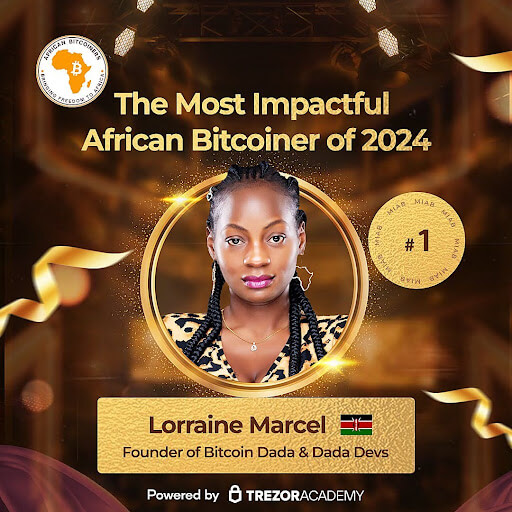
Recognition also followed this steady work. Building on recognition received in late 2024, when our founder Lorraine Marcel was named the Most Impactful African Bitcoiner, the focus in 2025 shifted toward sustaining that momentum. The recognition reflected years of consistency rather than a single moment and, more importantly, drew attention to the broader community of women whose work often happens outside the spotlight.
Partnerships with purpose
Partnerships in 2025 were designed to fill gaps and extend capability.
A defining moment was the launch of the ABC – Dada Fellowship in collaboration with the Africa Bitcoin Conference. The fellowship responded to a clear need: structured support for African women navigating professional and leadership pathways within Bitcoin. Through mentorship, targeted learning, and exposure to global networks, the fellowship provided a bridge between local participation and international engagement. In its first year, the fellowship brought together 14 women from six African countries, enabling them to participate directly in industry conversations, build relationships across the ecosystem, and gain first hand exposure to how global Bitcoin communities connect, collaborate, and lead. The experience strengthened relationships that continue to shape how these women contribute within their local contexts.
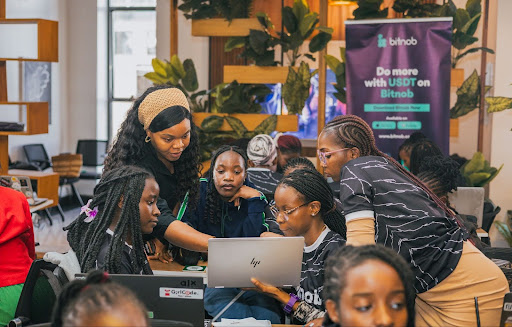
Collaboration with Bitnob centred on developer and product level engagement, exposing participants to application programming interfaces, payment flows, and the operational realities of building Bitcoin enabled products. These sessions complemented the objectives of DADA Devs.
Through Trezor, Bitcoin Dada introduced participants to hardware wallets and best practices around security, key management, and long term custody. This helped address one of the most persistent barriers to adoption, which is confidence in safely holding and managing Bitcoin.
Collectively, these partnerships reinforced Bitcoin Dada’s emphasis on competence over awareness. The goal was not simply to introduce tools, but to ensure that women left with the confidence to use, explain, and build with Bitcoin in real world settings.
Presence beyond the classroom
In 2025, Bitcoin Dada’s work moved beyond online classrooms and into communities across Africa, with a series of public events and workshops that brought learners, builders, and advocates together in person.
The year opened in February with a field visit to Gridless Compute in Kenya. Participants saw renewable energy powering Bitcoin mining operations while supporting local economies. The visit connected theory to infrastructure, showing Bitcoin not as abstraction but as working systems solving real problems.
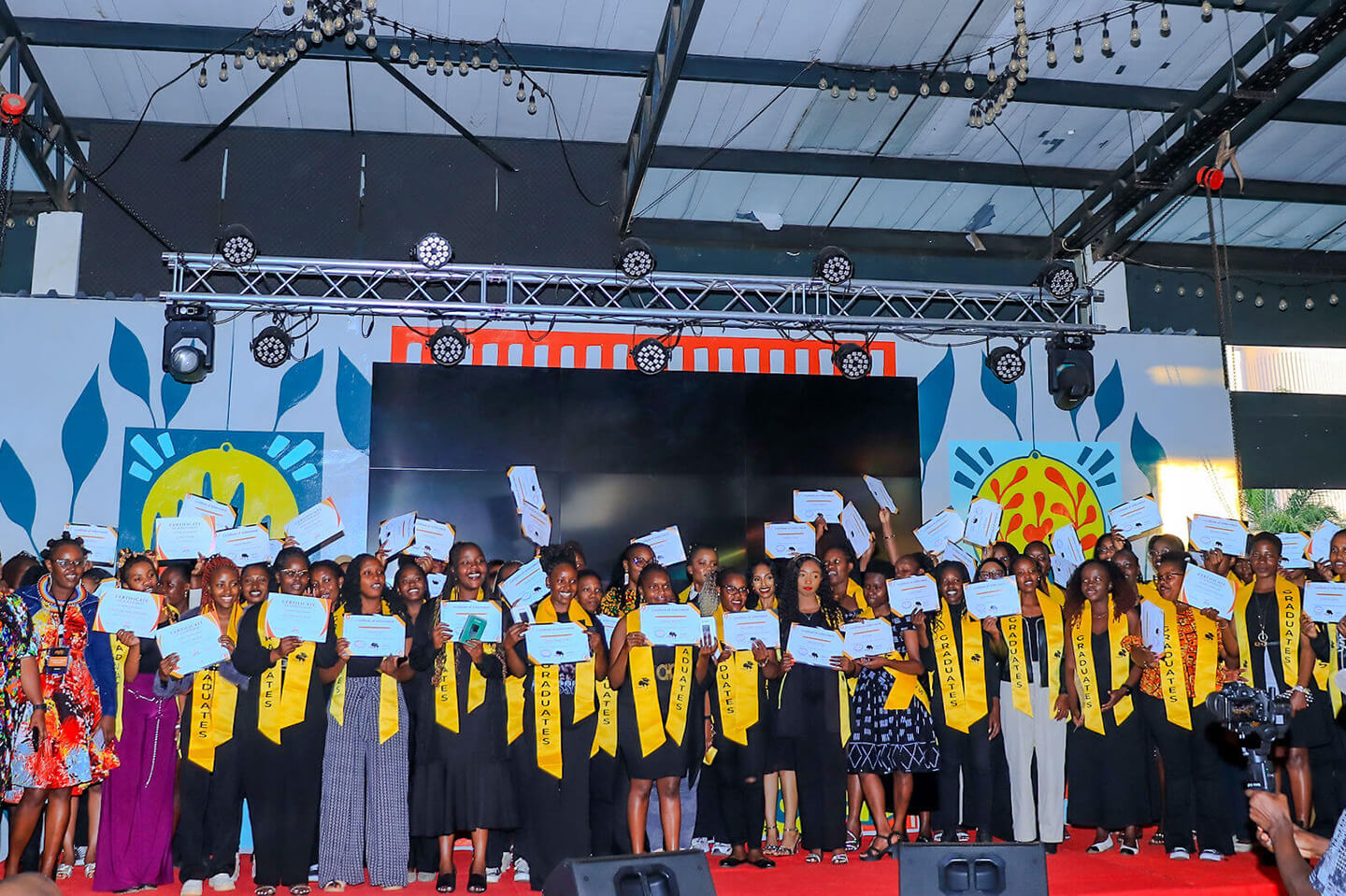
By April, Bitcoin Dada had convened the Bitcoin Dada Innovation Summit in Lagos. Held at the Radisson Hotel, Ikeja, the summit brought together over 200+ builders, educators, and community leaders from across West Africa. Programming included discussions on Bitcoin adoption, a wallet security masterclass, and a graduation ceremony for Nigerian participants completing the Bitcoin Dada cohort 8 program.
On 31 May, we participated in Africa Bitcoin Day in Nairobi, graduating two cohorts simultaneously: Cohort 8 from Bitcoin for Beginners and the second DADA Devs technical cohort. The double graduation positioned African women not only as Bitcoin users but as builders in the ecosystem.
Bitcoin Dada convened Next Block Uganda in Kampala to support broader adoption and understanding of Bitcoin within the local ecosystem. The gathering brought together participants working across education, community building, and everyday use, creating space to reflect on how Bitcoin fits into local realities and what is needed to support responsible, long term uptake.
In August, we launched a multi-country Bitcoin Wallet Workshop series across Kenya, Uganda, and Nigeria. The workshops addressed adoption’s most persistent barrier: fear of managing Bitcoin safely. Participants set up wallets, practiced securing seed phrases, and sent transactions. They left with working wallets and the confidence to use them.
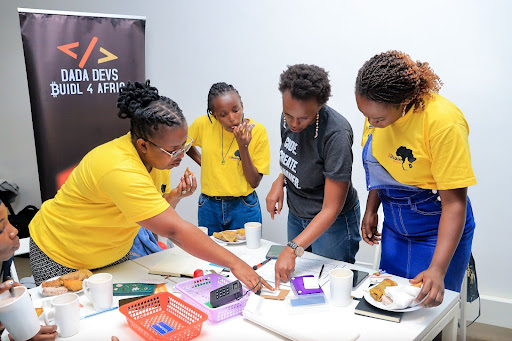
In October, Bitcoin Dada introduced a new form of immersive learning with its first Bitcoin LARP workshop, bringing members of the Bitcoin Dada and DADA Devs communities together in an interactive session that moved education beyond lecture halls and screens. The workshop was led by our founder and welcomed 25 participants who began the day with a shared refresher on the Bitcoin protocol before stepping into a live simulation where roles, coordination, and decision making became tangible exercises.
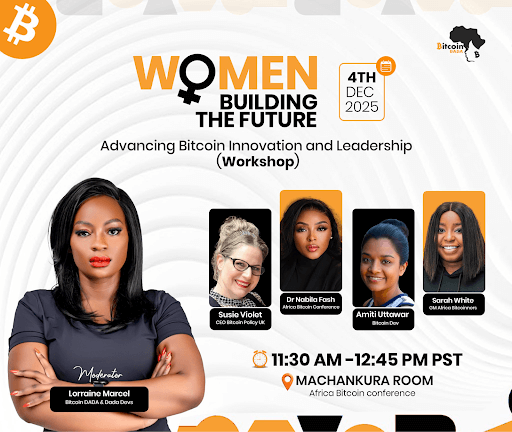
Bitcoin Dada closed the year at the Africa Bitcoin Conference in Mauritius (3-5 December), facilitating a session on women’s leadership and innovation in Bitcoin. The session positioned African women’s lived experiences within global conversations shaping Bitcoin’s future.
Similarly,through the year, Bitcoin Dada was represented at international forums including the Oslo Freedom Forum, Adopting Bitcoin Cape Town, Africa Bitcoin Conference Diaspora, Trezor: Trustless by Design Conference, and the Africa Bitcoin Conference, Mauritius aimed at inserting African women’s lived experiences into global conversations about Bitcoin, financial systems, and technology.
By year’s end, Bitcoin Dada had graduated nine cohorts from Bitcoin for Beginners and, through its technical arm DADA Devs, completed three cohorts in 2025. Over 1200+ participants engaged across twelve countries. Across these engagements, the approach remained consistent: to meet communities where they are, prioritise learning through shared experience, and ensure that women are not only included in conversations about Bitcoin, but actively shaping them.
Staying grounded
Even as programs expanded and visibility increased, Bitcoin Dada remained attentive to the realities shaping women’s lives.
In 2025, the organisation supported community initiatives focused on menstrual health in underserved areas. These efforts were modest in scale but intentional in purpose, reinforcing the belief that financial inclusion does not exist in isolation from everyday challenges.
The work served as a reminder that systems change often begins with meeting people where they are.
Looking ahead
2025 marked a year of alignment for us at Bitcoin Dada. Strategy, programs, partnerships, and voice began to move together, bringing greater clarity to decisions and consistency to execution.
The year closed with stronger structures, deeper community ownership, and a clearer role within the Bitcoin ecosystem. As we move into 2026, our focus remains on deepening technical training, expanding thoughtfully into new regions, and supporting more women to take part in building the future of Bitcoin.
Bitcoin Dada remains open to collaborations that are values led and grounded in shared purpose. If our work resonates with you and you would like to explore collaboration in 2026, we invite you to share your interest via email: info@btcdada.com or info@dadadevs.com