From the Margins to the Infrastructure: The Bitcoin Dada Story
I grew up inside a system designed to limit me.
Not in an abstract, structural sense — in the lived, daily, suffocating sense. By the time I was ten years old, I was already questioning the story I had been handed: that my highest aspiration was marriage, that my role in the economy was peripheral, that the world of wealth, power, and ideas was simply not mine to inhabit. That early defiance became a quiet compass. For years, I was drawn — almost unconsciously — toward anything that built women up. I didn’t have the language for it then. I just knew that financial dependence was one of the most effective tools of control ever devised, and that breaking it open was the work worth doing.
2018: A Lesson in What Not to Do
My first introduction to crypto came in 2018, during the ICO frenzy. The promise was seductive: financial freedom, decentralisation, money that moved at the speed of ideas. FOMO is a powerful force, and I gave in to it completely — diving in without a mentor, without a framework, with nothing but hunger and hope. What I found was a casino dressed up in the language of revolution. Projects collapsed. Tokens evaporated. People made fortunes and people lost everything. By 2021, I had stepped back, bruised but curious.
That period of observation led me to Bitcoin. Initially, the decision was simple. Bitcoin was the foundation, the origin point. If I was going to understand this space, I needed to start at the base layer. But the deeper I went, the clearer it became that Bitcoin was not just another asset class—it was a fundamentally different system. A decentralized, permissionless, open monetary network that did not rely on trust in institutions, but on verifiable code and global consensus. For someone who grew up watching institutions be used as instruments of exclusion, Bitcoin read like a different kind of promise entirely.
2022: The Moment Everything Shifted
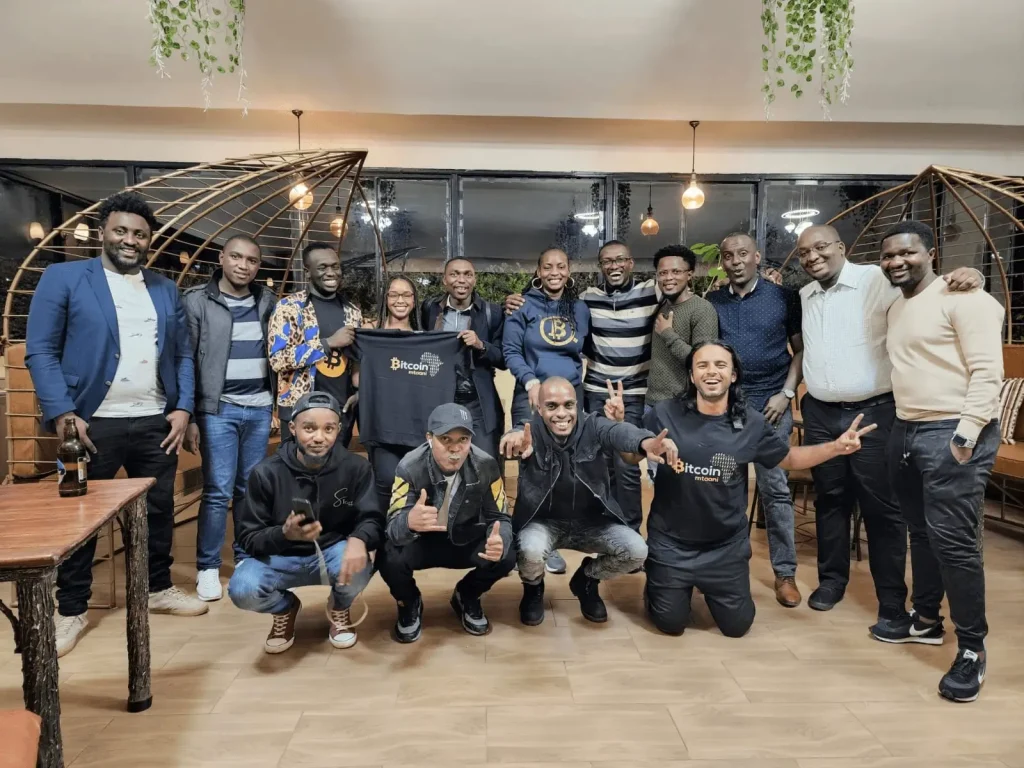
In 2022, shortly after the COVID-19 period, I organised a small meet up with Paco de la India, who was traveling across the world connecting Bitcoin communities. It was an intimate room, mostly filled with what many would describe as “Bitcoin bros.” I stayed out of curiosity. But what I witnessed in that room was not hype, it was conviction. The kind that comes from understanding something deeply.
I thought about Africa — a continent where 57% of adults remain unbanked, where cross-border remittances are taxed at some of the highest rates in the world, where currency devaluation quietly destroys the savings of working people, and where women face compounded barriers: restricted land rights, limited credit access, social norms that discourage financial autonomy. And I thought: this technology was built for exactly this.
Then I thought about us – African women specifically. And I went looking. Across an entire continent of over 700 million women, I found two actively participating in the Bitcoin ecosystem.
Two!!!!
That number became a call to action.
Bitcoin Dada: Built Without a Blueprint, Because There Wasn’t One
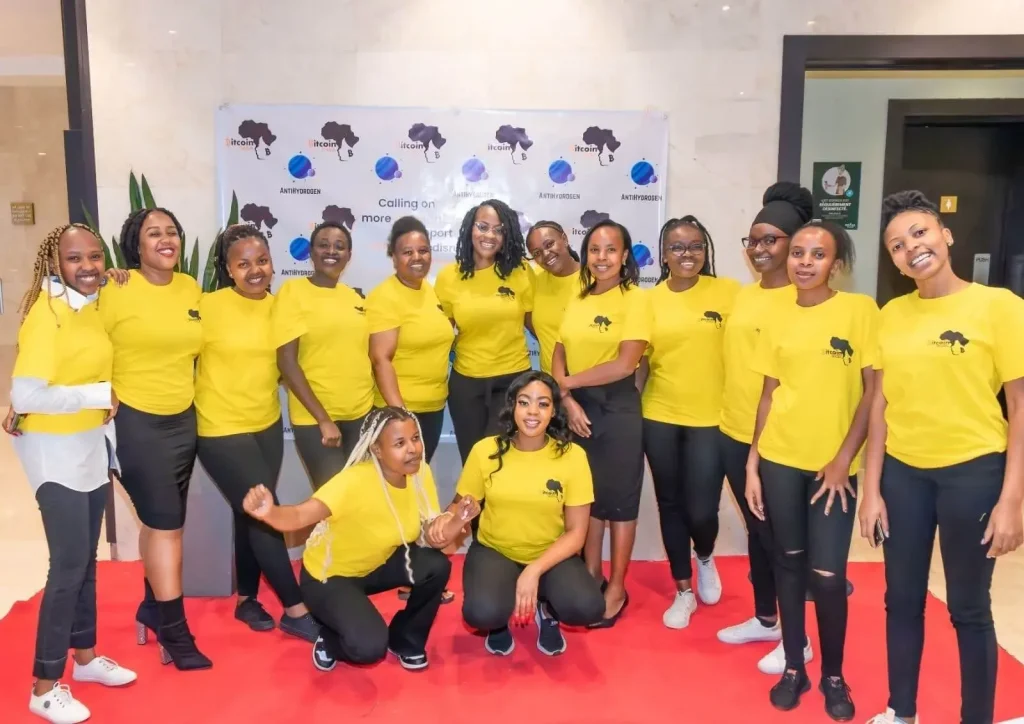
Bitcoin Dada began in a WhatsApp group. Twenty women — friends of friends — learning Bitcoin fundamentals together. Fifteen sat the exams. Twelve got certified. It was small, informal, and entirely unremarkable from the outside.
Except it wasn’t. It was the beginning of something that had never existed before.
By the second cohort, we had 150 students. Word travelled not through marketing budgets or investor decks, but because the need was so real, so acute, that women found us. Today, Bitcoin Dada has trained over 1,500 women on the fundamentals of Bitcoin and genuine financial literacy — not the sanitised curriculum taught in schools, but the kind of knowledge that changes behaviour: how money actually works, what it means to hold your own keys, how to transact across borders without asking permission from a bank.
Bitcoin Dada wasn’t built from a blueprint. It is the blueprint.
Every decision has been driven by community need. Our curriculum evolved because our students told us what was missing. Our expansion across 13 African countries happened because women in those countries reached out and said: we need this here. We have hosted more Bitcoin events centred on women than any other organisation on the continent.
Our work has been covered by Forbes and CoinDesk. We have been supported by the Human Rights Foundation and key players across the Bitcoin ecosystem. Our alumnae are not passive participants — they are founders, developers, international speakers, and contributors to open-source projects. They are building the future of money on a continent that needs it most.
And if I am honest: the scale surprised even me. The hunger for this was larger than anything I had imagined.
Dada Devs: When the Community Demands the Next Level
In 2024, I did something I had never planned to do: I launched a Bitcoin developer training programme.
It wasn’t on my roadmap. I am not a developer. But the women emerging from Bitcoin Dada — many of them with technical backgrounds, were asking for more. They wanted to go deeper: into the protocol, into the architecture, into the open-source codebase that underlies this entire system. While we initially directed them to existing programs, there was a clear gap—a need for a space designed specifically for female developers navigating Bitcoin. That need led to the creation of Dada Devs.
So Dada Devs was born — Africa’s only women-focused Bitcoin developer training programme. In two years, we have trained over 200 developers across the continent. These are not students waiting for jobs. They are building: developing their own Bitcoin projects, contributing to open-source repositories, working on Lightning
Network applications, and proving, quietly, rigorously that African women can be architects of the protocol, not just users of it.
The Gap We Could No Longer Ignore
Here is what four years of doing this work has taught me about the gap that nobody talks about.
Across 13 countries, across vastly different economic realities and levels of exposure, I have watched the same pattern repeat itself. Women show up. They do the work. They learn. They earn credentials. They develop skills that would be career-defining in any other context. And then — they stall. Because the infrastructure isn’t there.
There are no structured pathways for women in this space to move from learner to builder to owner. No physical base from which to develop ideas into ventures. No peer network of technical women to pressure-test, collaborate, and grow with. No access to the funding and mentorship ecosystems that turn good ideas into real businesses. The result is talented, trained, motivated women sitting at the edge of an ecosystem that says it is open to everyone and finding that open, in practice, rarely means accessible.
For ecosystem builders, institutional investors, corporate partners, development finance institutions, and forward-thinking foundations, this should be a signal, not a footnote. Untapped, high-potential talent sitting just below the threshold of institutional support is where the most asymmetric opportunities live. The question is who partners with the infrastructure that unlocks it first.
Dada Hub: The Infrastructure Africa Has Been Waiting For
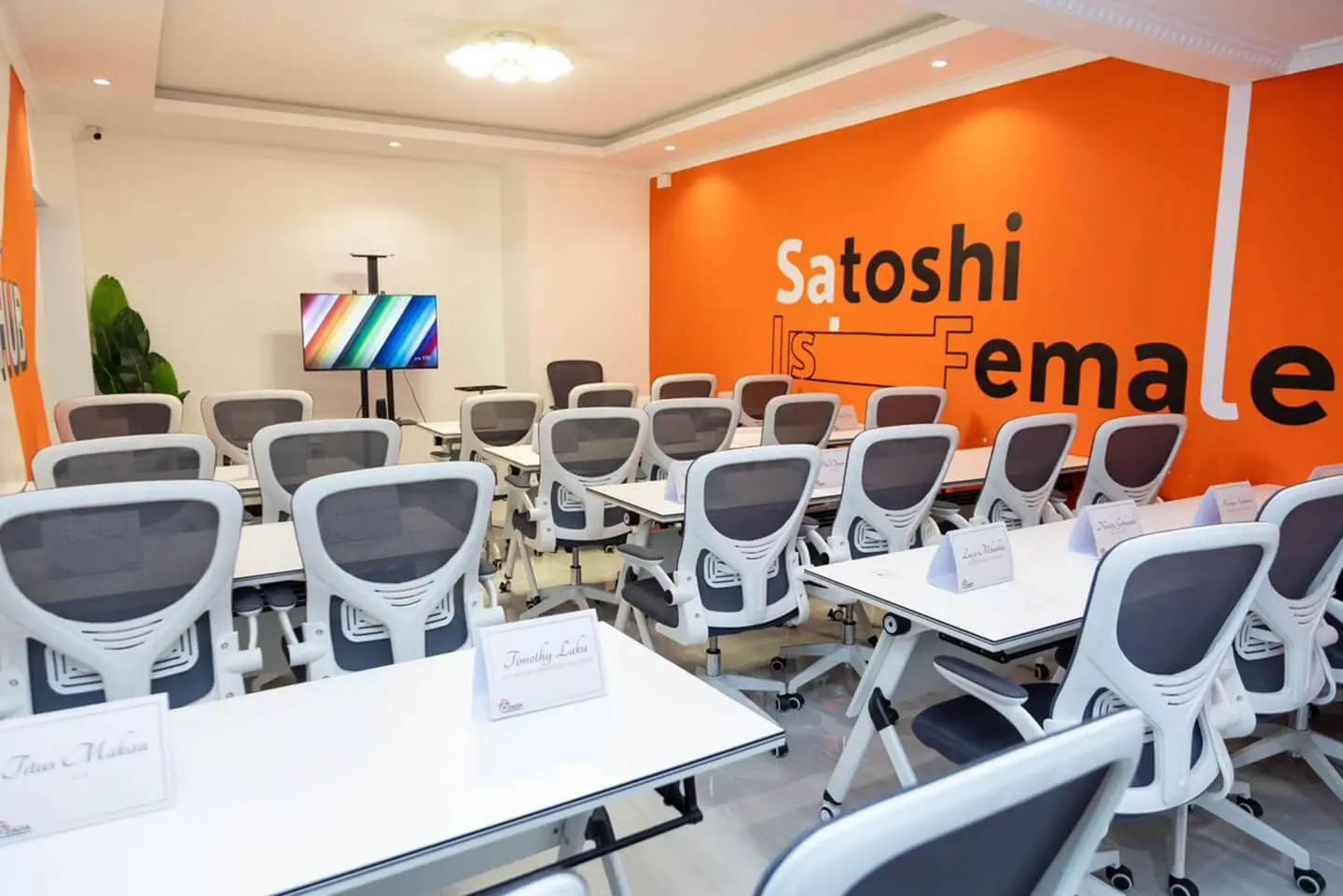
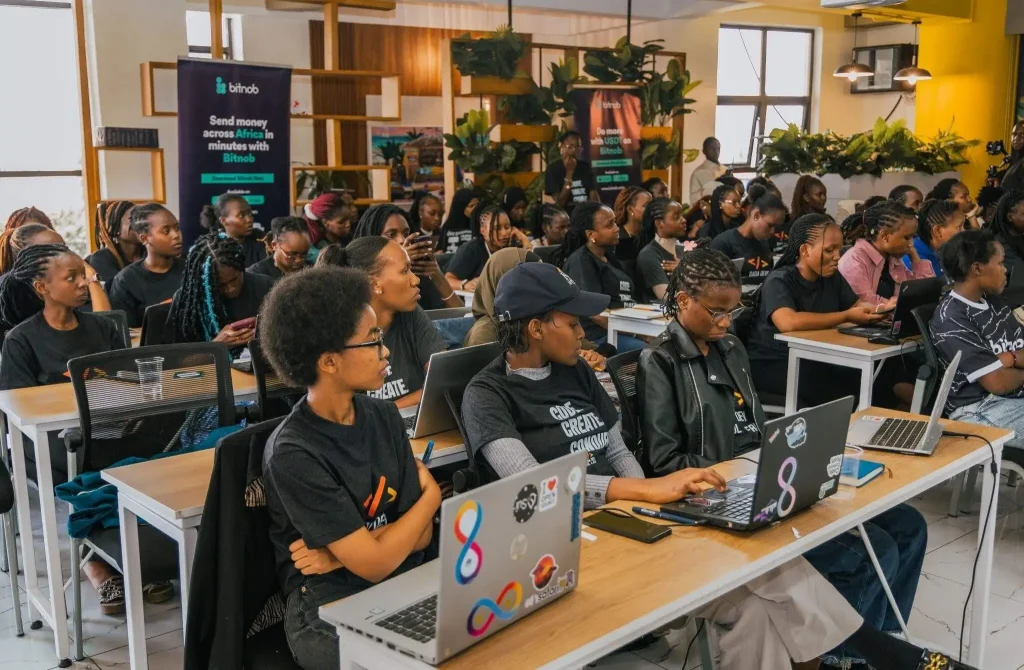
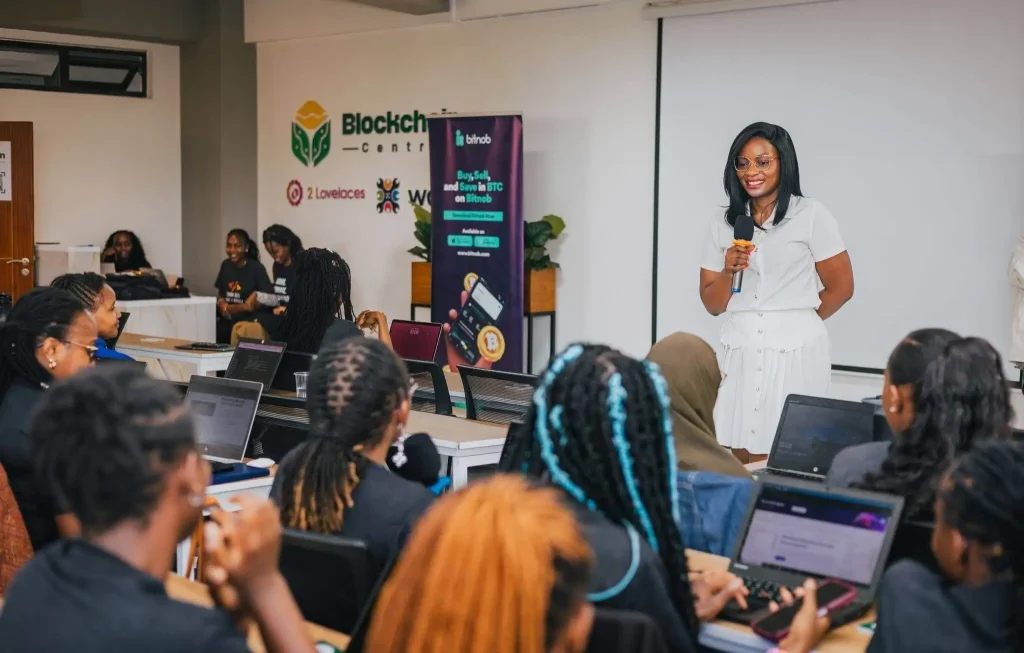
On April 18th, 2025, we opened the doors of Dada Hub — Africa’s first women-led open monetary systems and AI innovation hub.
Dada Hub is the missing layer in the ecosystem — the place where education becomes enterprise, where a trained developer becomes a funded founder, where a woman with a market insight forged from lived experience in one of the world’s most dynamic economic regions gets the structure, the network, and the runway to build something real. Our inaugural residency programme is the first proof of concept: a cohort-based, high-intensity track designed to take women from capability to company.
The market case is straightforward. Sub-Saharan Africa has the youngest population on earth, the fastest-growing mobile money adoption, and some of the highest demand for alternative financial infrastructure anywhere in the world. The talent is here. The market need, is here. What has been missing is the institutional scaffolding to convert that into scalable ventures and that is precisely what Dada Hub was built to provide.
The research on this is unambiguous: women reinvest the overwhelming majority of their income back into their families and communities, creating compounding economic returns that extend well beyond the individual. Closing the gender gap in digital and financial participation in Sub-Saharan Africa alone could unlock hundreds of billions of dollars in regional GDP. This is not a social argument dressed up as a business case. It is the business case.
We didn’t wait for someone else to build this.
From a WhatsApp group of 20 women to a continent-spanning institution present in 13 countries: 1,500+ women trained, 200+ developers active across the ecosystem, and now a physical innovation hub anchoring it all — this is what patient, community-driven institution-building looks like. The foundation is in place. The pipeline is proven. The next chapter is scale.
The infrastructure for African women to lead in the future of money and emerging technologies like AI, now exists. The work of building it, is far from finished. But the foundation — the real, lasting kind, is in place.
— Lorraine Marcel (Queen), Founder, Bitcoin Dada | Dada Devs | Dada Hub