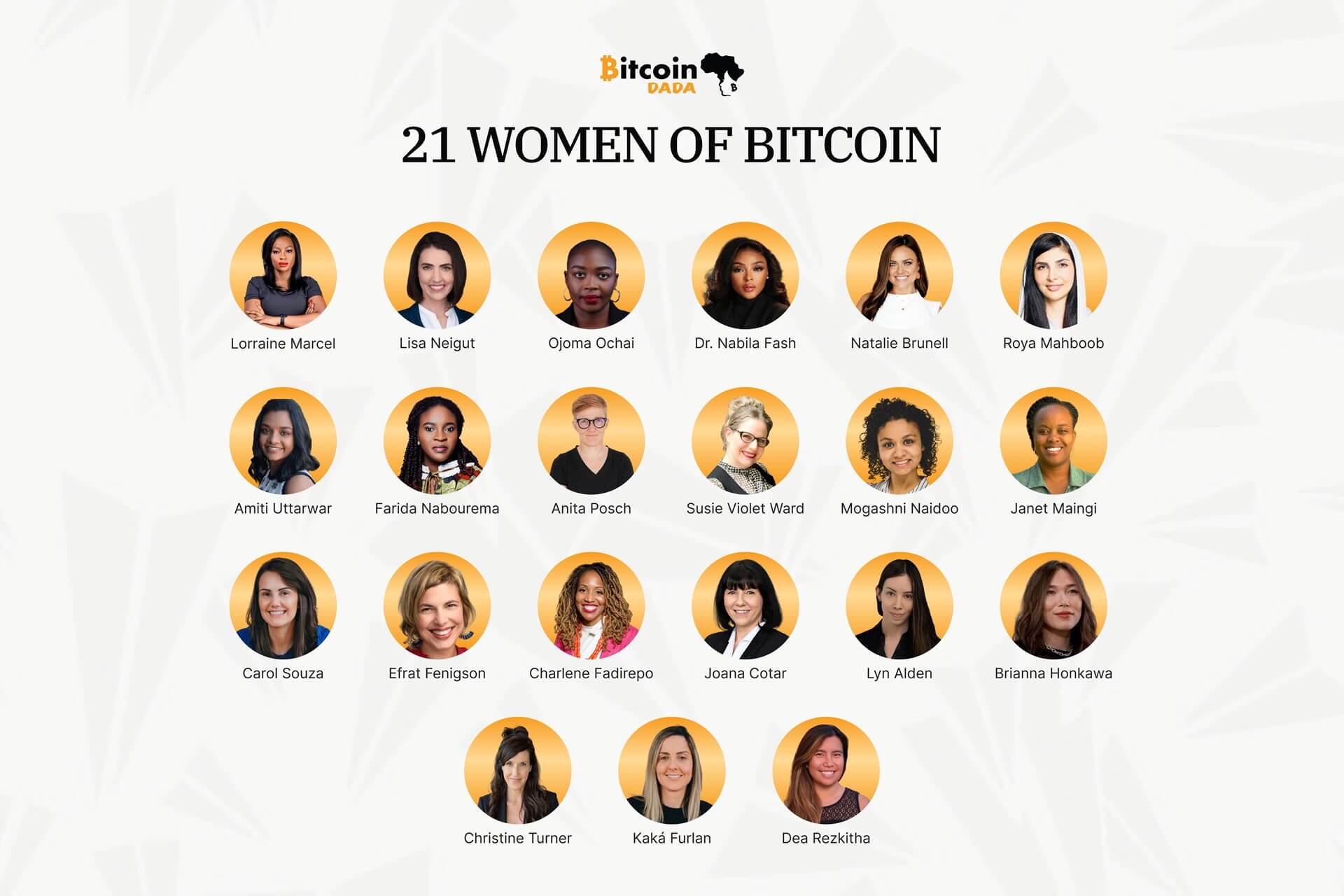
Celebrating the Women Building With Bitcoin Across The World (Part II)
The story of Bitcoin in Africa and beyond is often told through charts, adoption metrics, and headlines about currency collapse. What those narratives miss is the human infrastructure underneath them, the educators translating technical concepts into everyday language, the developers maintaining open-source systems, the organisers building institutions, and the women creating pathways into an ecosystem that has historically overlooked them.
Across the continent and beyond, women are building the foundations of Africa’s Bitcoin future from the ground up. Not as figureheads. Not as diversity initiatives. As engineers, founders, designers, researchers, organisers, and educators solving problems that formal financial systems have failed to solve for decades.
Some are building developer pipelines so engineers can contribute directly to Bitcoin Core and Lightning infrastructure. Others are creating educational systems, design frameworks, leadership networks, and conferences that ensure participation in Bitcoin is not extractive or temporary, but durable and self-defined.
What connects them is not geography or ideology. It is a shared understanding that financial freedom cannot be imported. It has to be built locally, collectively, and intentionally.
This edition highlights women helping shape that future across Africa, the Global South and beyond.
Dr. Nabila Fash | Nigeria – Africa Bitcoin Conference

Dr. Nabila Fash has helped shape one of the continent’s most important Bitcoin institutions: the Africa Bitcoin Conference. As Executive Director, her work centres on building long-term infrastructure for collaboration across the African Bitcoin ecosystem — connecting developers, educators, policymakers, entrepreneurs, and investors across borders and disciplines.
Under her leadership, the conference has evolved beyond an annual event into a platform for ecosystem coordination and narrative ownership. In a global industry where conversations about Africa are often framed externally, Nabila has consistently positioned African builders as active participants in shaping Bitcoin’s future rather than passive recipients of innovation designed elsewhere.
Her work reflects a broader shift taking place across the continent: Bitcoin in Africa is no longer only about adoption. It is increasingly about ownership, participation, and institutional presence.
Ojoma Ochai | Nigeria – Btrust

Ojoma Ochai’s work through Btrust represents one of the most critical layers of Bitcoin’s long-term success: open-source development.
Btrust was founded with a clear mission — to support Bitcoin and Lightning developers across the Global South, particularly in Africa. Through grants, technical mentorship, fellowships, and developer education, the organisation is building pathways for African engineers to contribute directly to the underlying infrastructure powering the Bitcoin network.
The significance of that work cannot be overstated. Financial systems are shaped by the people who build them. For decades, African developers have largely been positioned as consumers of technology rather than contributors to foundational protocols. Btrust is helping change that reality.
Ojoma’s leadership reflects an understanding that meaningful financial inclusion is not only about access to tools, but also about participation in the systems those tools are built on.
Charlene Fadirepo | Global – Satoshi Sister Circle

Charlene Fadirepo operates at the intersection of education, leadership, and narrative building. A former U.S. financial regulator turned Bitcoin educator, she is the founder of Satoshi Sister Circle, a network focused on supporting and empowering women across the Bitcoin ecosystem.
Her work has consistently centred on the lived realities driving Bitcoin adoption across Africa: inflation, remittance barriers, currency instability, and exclusion from traditional financial systems. Through speaking engagements, educational initiatives, and her book The Bitcoin Leap: How Bitcoin Is Transforming Africa, Charlene has documented how ordinary Africans are using Bitcoin as practical financial infrastructure rather than speculative technology.
What distinguishes her work is the insistence that African experiences are not secondary to the global Bitcoin story — they are central to it.
At a time when conversations around financial freedom often remain theoretical, Charlene’s work continues to foreground the communities already living the consequences of monetary instability and building alternatives in response.
Mogashni Naidoo | South Africa & The Netherlands – Bitcoin Design Foundation
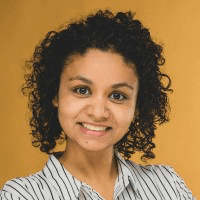
Bitcoin adoption is often framed as a technical problem. Mogashni Naidoo understands that it is equally a human one.
As a contributor to the Bitcoin Design Community and co-founder of the Bitcoin Design Foundation, Mogashni’s work focuses on making Bitcoin tools more accessible, intuitive, and usable for ordinary people. Her work spans user experience research, open-source design collaboration, and educational initiatives that help developers better understand the people they are building for.
This work is especially important across African contexts, where many users navigate low-bandwidth environments, inconsistent connectivity, multiple languages, and financial systems that were never designed with them in mind.
Design determines whether technology remains exclusive or becomes accessible. Mogashni’s work sits precisely at that intersection — helping ensure Bitcoin products are not only technically functional, but usable by the people who need them most.
Lisa Neigut (Nifty Nei) | United States / Global – Base 58 & Bitcoin++

Lisa Neigut, widely known as Nifty Nei, is a Lightning protocol engineer, educator, and founder of Bitcoin++, one of the most respected technical conference series in the Bitcoin ecosystem. Through Bitcoin++, she has created collaborative spaces dedicated to Bitcoin protocol research, Lightning development, privacy, scaling, and open-source experimentation.
Her work extends beyond conferences. Lisa is also co-founder of Base58, a Bitcoin developer education platform focused on structured technical learning for both new and advanced contributors. Through workshops, courses, and hands-on training, Base58 is helping grow a new generation of Bitcoin and Lightning developers globally.
Before building Bitcoin++ and Base58, Lisa worked as a Lightning developer at Blockstream, contributing to implementations of the Lightning Network and broader Bitcoin infrastructure research. Much of her work has focused on improving scalability, peer-to-peer networking, and Lightning interoperability.
What distinguishes Lisa’s contribution is her emphasis on technical accessibility. In an ecosystem where protocol development can often feel opaque or exclusionary, she has consistently focused on making deep Bitcoin education collaborative, practical, and community-driven. Through Bitcoin++, she has helped create environments where developers are encouraged not only to consume knowledge, but to contribute to the future of the protocol itself.
Amiti Uttarwar | India / Global South – Waye
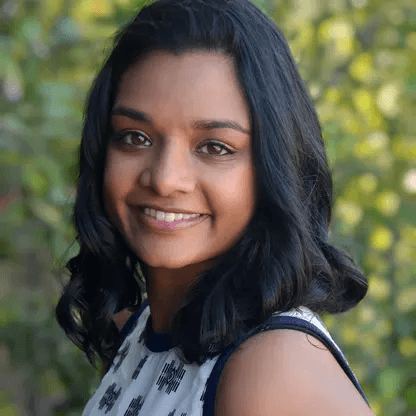
Amiti Uttarwar is one of the most respected Bitcoin Core contributors globally and the founder of Waye, a nonprofit supporting long-term open-source and freedom-technology builders.
Her technical work has focused heavily on peer-to-peer networking, node privacy, testing, and improving the resilience of Bitcoin’s infrastructure. She became widely recognised as the first known female contributor to Bitcoin Core and has remained a consistent advocate for sustainable pathways into open-source development.
Through Waye, Amiti’s focus extends beyond code itself and into the people maintaining critical infrastructure. Open-source systems depend on contributors whose work is often invisible, underfunded, and difficult to sustain long-term. Waye was created to support those builders directly.
Her inclusion in this story matters because it expands the understanding of Bitcoin work itself. Adoption alone does not sustain a network. Protocol stewardship does.
Brianna Honkawa | United States – Hack4Freedom

Brianna represents a younger generation of builders connecting Bitcoin, open-source technology, and digital freedom movements through education and community.
As founder of Hack4Freedom, she is building learning spaces that introduce young Africans to decentralised technologies, developer education, and open-source participation. Her work focuses on creating accessible entry points into technical ecosystems that have historically excluded large parts of the continent.
What makes initiatives like Hack4Freedom significant is that they operate before mainstream recognition arrives. They build the pipeline early — cultivating curiosity, technical confidence, and community among people who may otherwise never see themselves reflected in global technology spaces.
The future of Bitcoin in Africa will depend not only on today’s infrastructure, but on who is empowered to build tomorrow’s. Brianna’s work is helping shape that future now.
The women in this edition are building conferences, developer ecosystems, design frameworks, educational platforms, open-source infrastructure, and freedom-tech communities. Their work spans Kenya, Nigeria, South Africa, Zimbabwe, the wider Global South and beyond. Some are writing code. Others are building institutions. All of them are expanding the boundaries of who gets to participate in shaping financial systems.
For years, conversations about Bitcoin in Africa have focused primarily on adoption statistics. But adoption is only one part of the story. The deeper story is about ownership — who builds the tools, who defines the narratives, who shapes the infrastructure, and who decides what financial freedom looks like in practice.
These women are helping answer those questions in real time.
A deep bow to every woman shaping Bitcoin across Africa and beyond. The ones featured here, and the many more whose stories are still being written — you are the infrastructure.